
How to offer personal shopping appointments on Shopify

A customer asks which jacket will work with the trousers they already own. You answer, then send another photo, find a different size, and explain why one fabric will suit the occasion better. By the time the customer decides, the recommendation is spread across a conversation and several product links.
A personal shopping appointment gives that work a place and a time. You speak with the customer, show the relevant products, and help them build a selection they understand. For a Shopify store, the useful connection is between the advice you give and the actual products the customer can buy.
You do not need to offer an appointment for every purchase. Begin with the decisions where a person's knowledge can help.
Choose a question your appointment will answer
An appointment should have a purpose the customer can recognize. “Help me choose an outfit for a wedding” gives both people a useful starting point. “Talk to our team” leaves the customer to work out why they should book.
Look at the questions people already ask before buying. Some are simple enough for a clearer product description. Others need a conversation because the answer changes with the person's plans, preferences, or existing belongings. Those are the best starting points for a personal shopping service.
A boutique might offer help assembling an occasion outfit. A jewelry store might offer a closer look at a few pieces before a gift purchase. A homeware store might help a customer compare lamps against the dimensions of a room. Choose one such job for your first appointment type and describe the help plainly.
Start with an audience your team knows well
Personal shoppers and stylists are a natural fit when they sell or advise on a Shopify store's catalog. They can help a customer put pieces together, explain alternatives, and adapt a recommendation as they learn more. The appointment is most useful when the stylist can show the actual items under discussion.
Jewelry and accessories specialists can help customers compare scale, construction, and how pieces look together. Someone choosing a gift might need help balancing the recipient's style, the occasion, and a budget. The specialist can narrow the selection and explain each recommendation.
Vintage and resale sellers can use a call to show the particular item a customer is considering. They can turn it over, explain wear, and take the customer to a detail they want to see. Accurate measurements and a written condition description still matter; the conversation gives the shopper a way to ask about them.
Homeware merchants can compare materials, demonstrate how an object works, and discuss proportions. Ask customers to bring relevant measurements. Video can show details, but it cannot guarantee how a color will appear on another screen or whether an object will fit a space you have not measured.
These uses share a practical requirement: the person hosting must have something useful to contribute. They need product knowledge, access to the relevant pieces, and enough time to listen.
Give the customer a clear reason to book
Place the invitation where the question is likely to arise. A link near sizing guidance can offer help comparing fit. A gift guide can invite customers to discuss a shortlist. An existing customer conversation can lead to an appointment when more product links are unlikely to settle the choice.
Keep the promise specific. A boutique could write: “Book a private appointment to put together an outfit for your occasion. Tell us what you already have and what you want help choosing.” A homeware store could say: “Compare your shortlisted pieces with us on a private call. Bring your room measurements and the questions you want to work through.”
Set expectations before the visit. Tell customers how long to allow, what to bring, and whether the purpose is choosing products or discussing an existing order. When you offer product advice, make the next step easy to understand without promising that every question can be settled by video.
Publish times you can actually host
An appointment uses time before and after the call as well as during it. The host may need to find stock, prepare samples, and check the outcome afterward. Leave room for that work when you choose your availability.
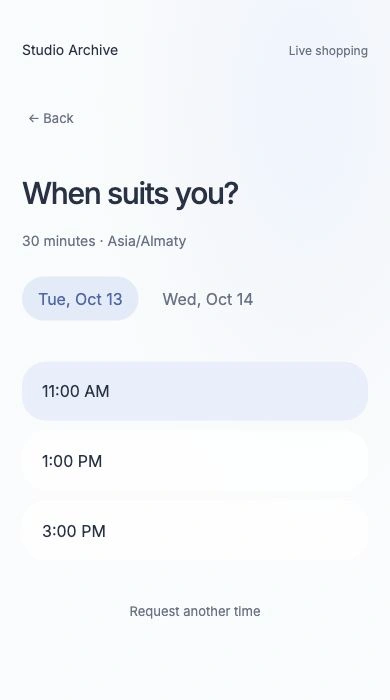
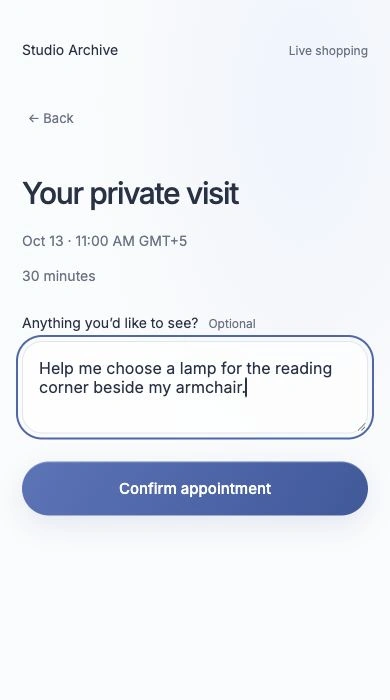
With Private Shopping in Stores on Live, merchants publish specific available times. Customers can book one or request another time and add a note. A proposed alternative becomes a confirmed visit when the customer accepts it. You can also invite an existing customer directly.
Start with a small number of times your team can cover reliably. Review the actual length of early visits before opening more availability. A short comparison of two products and a full outfit consultation may need different amounts of attention.
Prepare enough to begin the conversation
Read the customer's note and gather the pieces most likely to help. Check the product information you expect to discuss, including options, measurements, and current availability. Keep nearby alternatives ready if the first choice turns out to be unsuitable.
For a wedding outfit appointment, the opening questions could be simple: What is the setting? What does the customer already plan to wear? Is there a practical concern, such as warmth or freedom of movement? Agree on the problem before recommending a solution.
You do not have to predict the entire selection. Private Shopping lets you search the Shopify catalog during the call and show another product as the conversation develops. Preparation gives you a useful opening; listening tells you where to go next.
Make each recommendation easy to follow
Explain why you are showing a piece. “This jacket gives you more room through the shoulder” is more useful than presenting three more jackets without context. Demonstrate the detail that supports the recommendation, then give the customer time to respond.
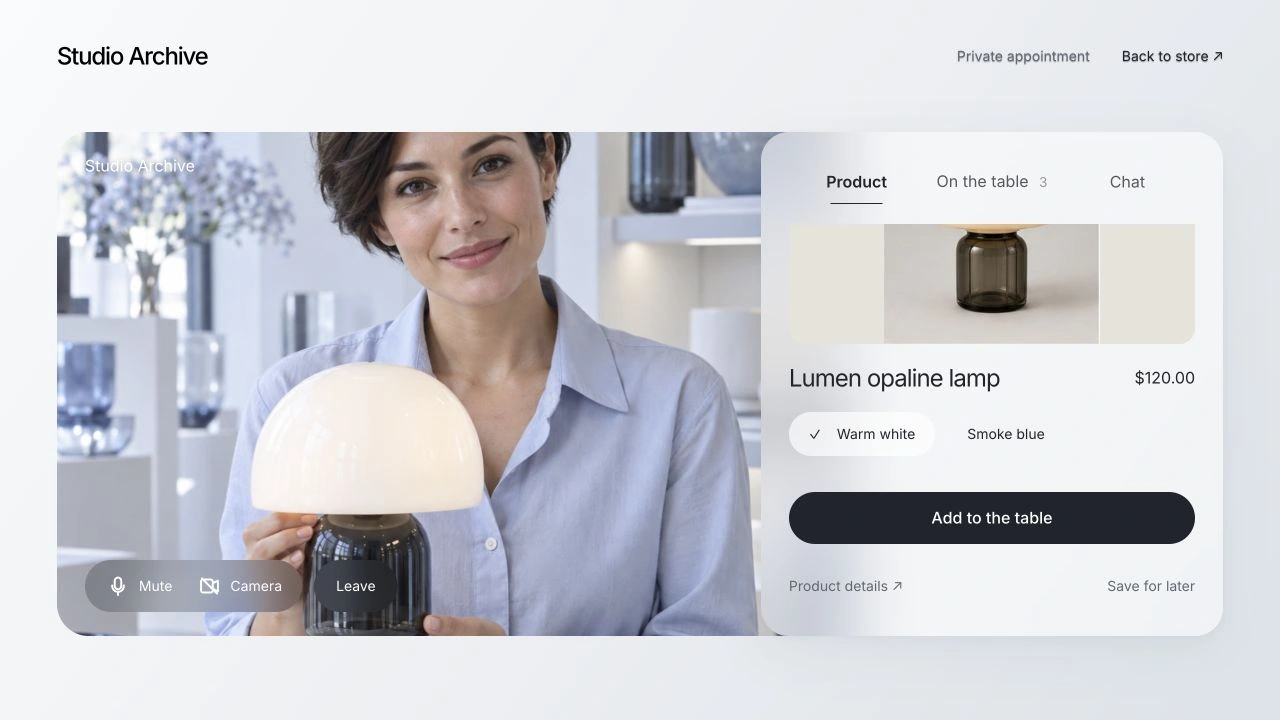
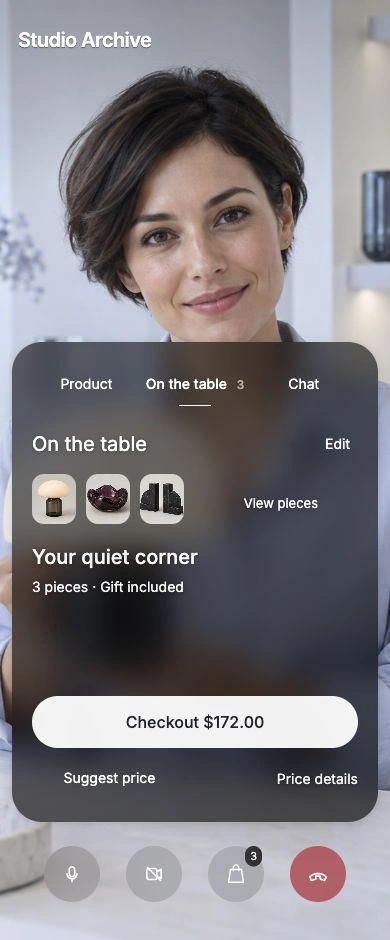
Bring the corresponding product into the appointment so the customer can inspect its options and choose the variant they want. In Private Shopping, you and the customer work with the same bag. Either person can change quantities or remove items, and the selected option can be changed as you decide together.
Keep possible choices separate from agreed choices. A shared shortlist lets the customer save a product for later without adding it to the bag. This is particularly useful when they like a piece but want to compare it with something else before deciding.
Before moving toward checkout, read the selection back with the customer. Confirm the size or color, quantity, and reason for each piece. The bag should represent the decision you reached together.
Use offers when they support the purchase
An appointment can be valuable at the regular price. Product advice, a closer look, and a considered recommendation are reasons to book in their own right.
When an offer is appropriate, make the terms easy to review. Private Shopping supports a private discount, a minimum spend, or a catalog gift. You can also present several pieces as a named collection with an offer price. The customer sees the selection before deciding whether to continue.
If an eligible offer allows a customer to suggest a price, treat that as a proposal. It changes the agreed price only after the merchant accepts it. Confirm the final items and terms before starting checkout, especially if a size, quantity, or gift has changed.
End with a clear next step
When the customer is ready to buy, the appointment bag leads to Shopify checkout. Shopify handles shipping, tax, and payment. Adding items during the conversation does not charge the customer or reserve stock.
If the customer needs more time, explain what remains available. In Private Shopping, the ended appointment keeps the saved bag available for review and checkout during the remaining access period, but its contents can no longer be edited. An offer may expire before that access does. Avoid leaving someone with the impression that a price or item will be held indefinitely.
The customer can request an email recap, and you can offer times for another visit when there is a reason to continue. A recap request is separate from marketing consent. Keep the follow-up focused on what would help the customer make the next decision.
Decide whether appointments are earning their time
Track a few practical measures from the start. Count booked and attended visits, record the host's preparation and call time, and distinguish a checkout being opened from a paid order. Keep these records yourself if your current reporting does not connect the full journey.
Choose a consistent period for counting purchases after an appointment. Then look at what remains after product cost, discounts, returns, and staff time. An appointment that produces a larger order may still be expensive to provide.
Also record what people needed help with. Repeated sizing questions may point to a product page that needs better information. Frequent comparisons between the same products may suggest a useful buying guide. Individual advice remains valuable, while the store can learn which answers should become easier for everyone to find.
Do not assume an appointment caused every purchase that followed it. People who book may already be closer to buying. Use the early results to improve the service and decide where to offer it, rather than turning a small sample into a sales promise.
Connect your advice to the customer's selection
Stores on Live brings the private call, Shopify products, shared bag, offers, and checkout path into one appointment experience. It suits merchants who want to help customers choose from their own store's catalog and carry those choices through to a purchase.
Start with a customer you can help, a question you can answer, and a few times you can reliably host. The appointment earns its place when the customer leaves knowing what suits them, why it suits them, and how to buy it.